
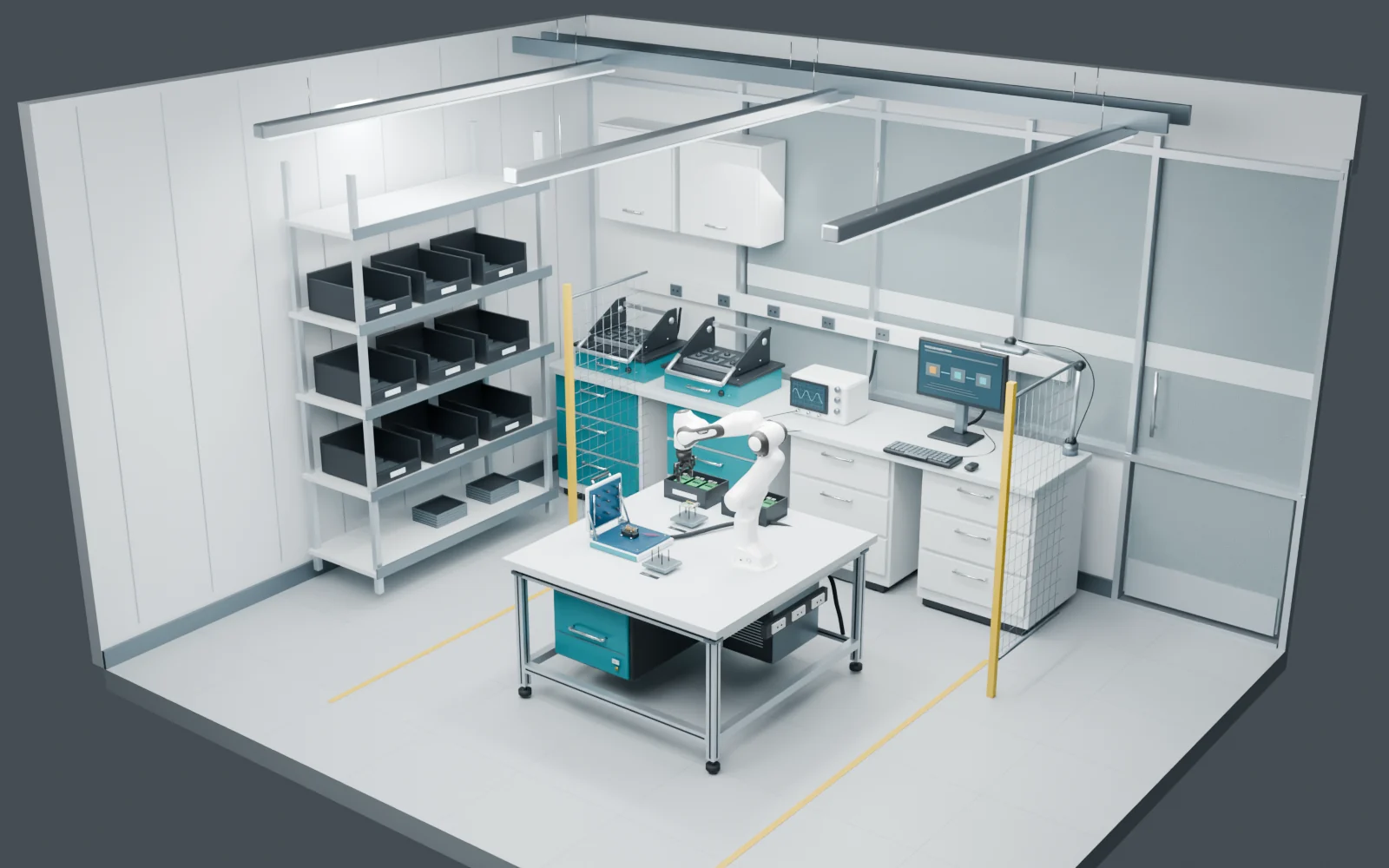
Public example · Precision electronics
A precision task. An inspectable robot run.
Small holes. Real collision geometry. Pick the populated board, align its mounting holes, engage the locating pins, release and inspect.
85 × 56 mm
Manufacturer PCB outline
2.7 mm
Mounting-hole diameter
0.35 mm
Nominal round-pin radial clearance
96 pieces
Rigid compound collision geometry
the task
Precision has to exist in the physics.
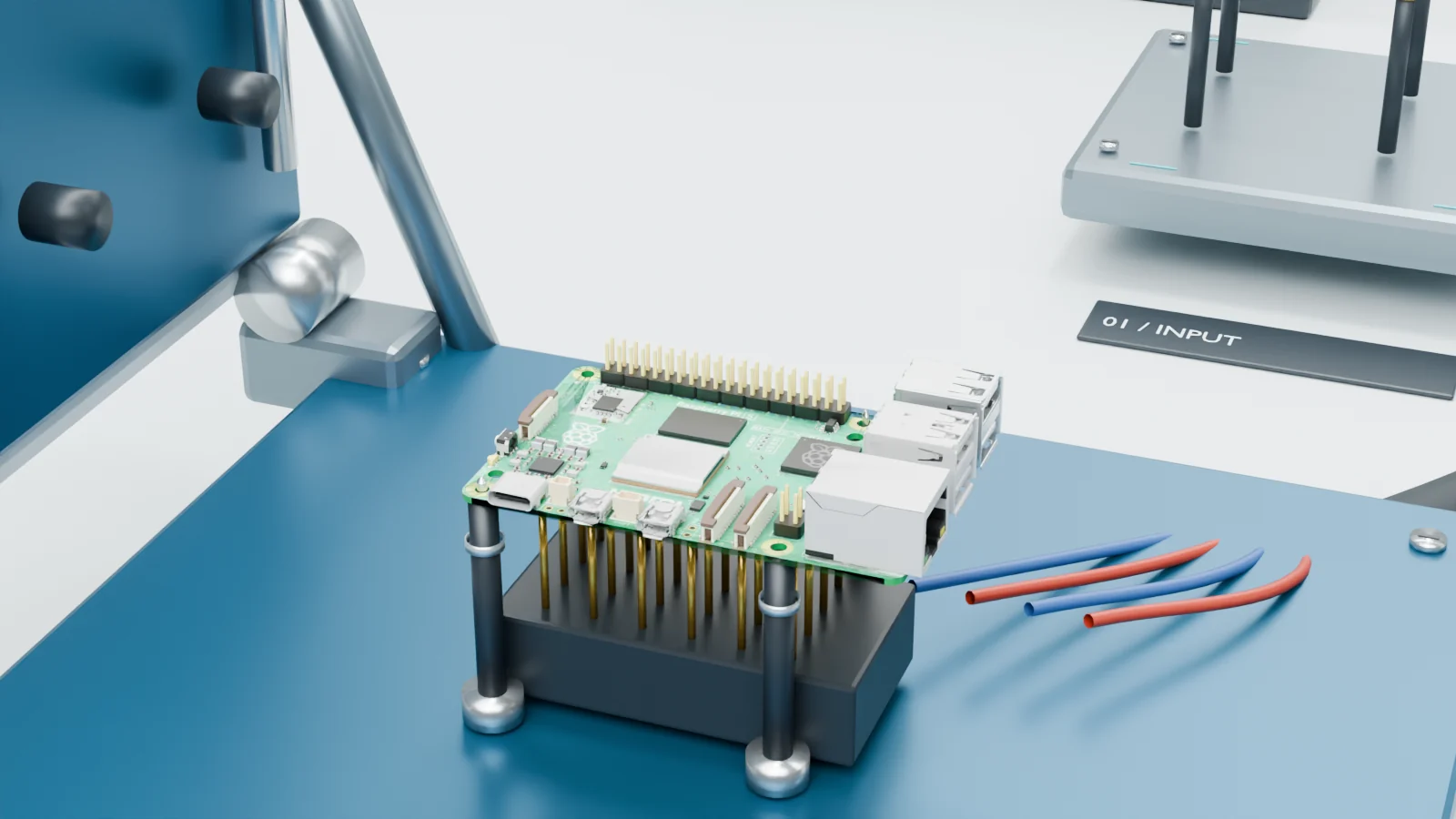
The original CAD provides populated components, connectors and open mounting holes. Convex collision pieces preserve those openings instead of filling them with a hull, so the pins can actually engage.
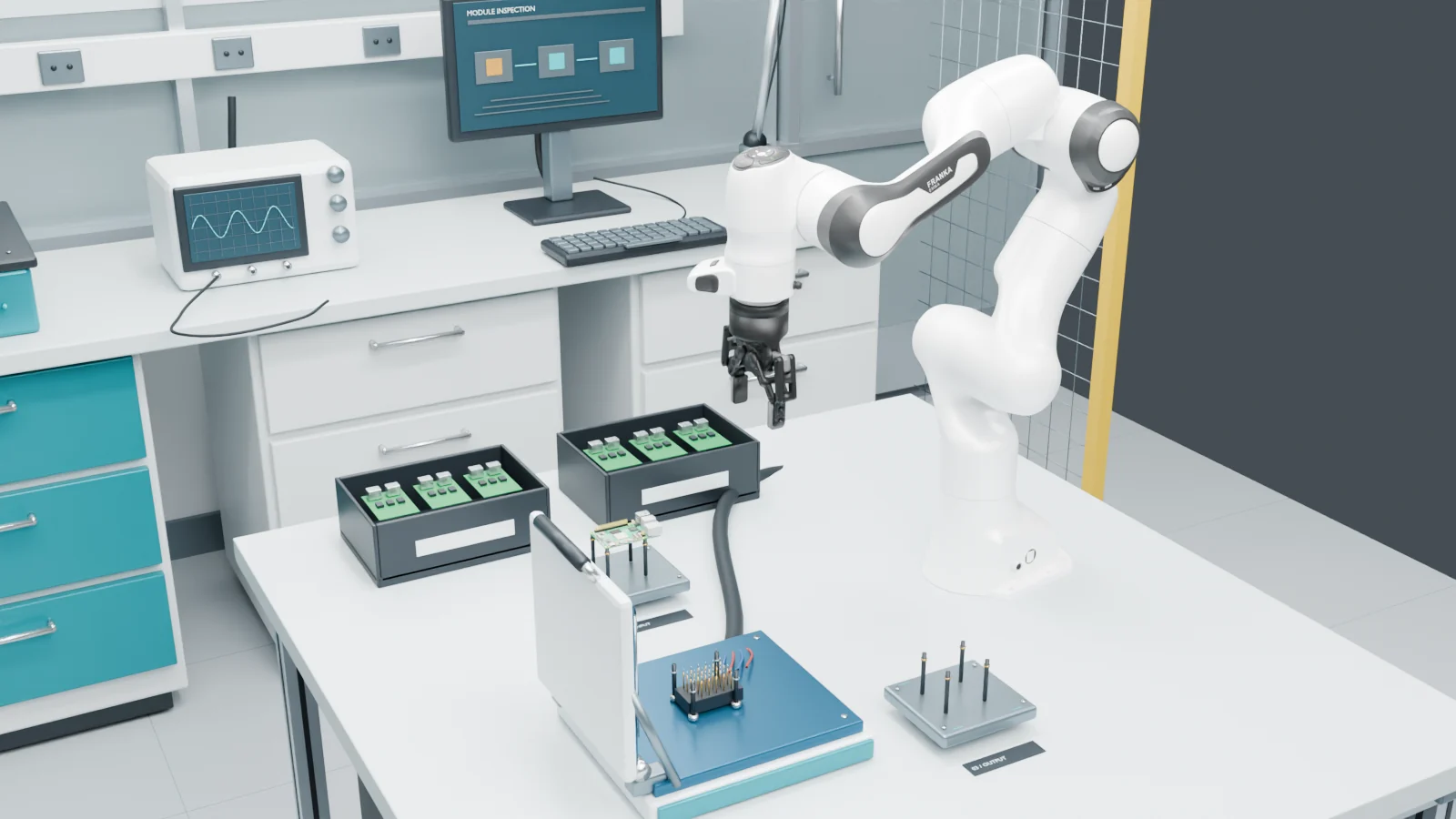
- 01 Pick the populated board
Lift it from the input nest without disturbing the components.
- 02 Align and engage
Bring the mounting holes over the round and relieved locating pins and lower the board onto them.
- 03 Release and inspect
Let go, check the seating from the cameras, then retrieve the board vertically.
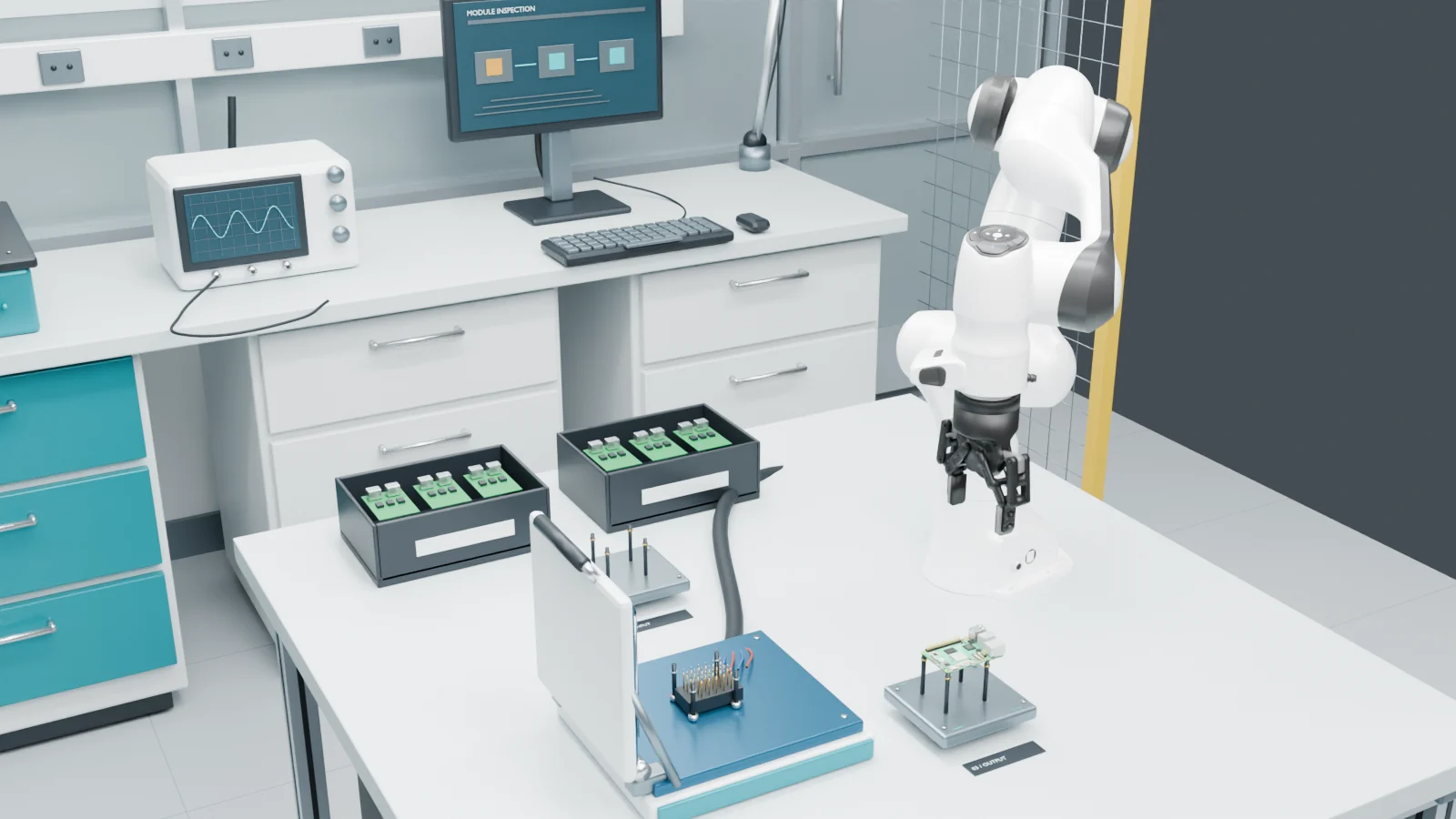
- 04 Place in OUTPUT
Set the board down in the output nest and withdraw.
Atom · GPT-6 Astra · 3 camera views
Watch the actual attempt.
A 35-second film of the actual recorded physics with three synchronized cameras, rendered for presentation. Robot geometry comes from the simulator.
measured results
Check the outcome.
The published run was measured against independent command replay and the fixture geometry.
Results for one nominal simulated arrangement with rigid parts and estimated contact parameters. Electrical testing and hardware transfer are unvalidated.
Independent review · PCBA fixture loading
| Seated hole alignment error | 0.144 mm |
| Peak simulated fixture contact | 8.65 N |
| Output placement error | 0.652 mm |
| States matched independent replay | 549 of 549 |
Inspect
Frames from the record.
make it yours
Start here. Change the conditions.
Editable laboratory, workbench, storage, instruments, guards and task fixture. Copy the scene, robot and camera setup and the commissioned task into your RobotGym workspace, change the task or policy and run your own experiment.
Creating a copy is free. Simulation previews, policy runs and environment edits use your account’s credits.
Files
Related
Other demos