NewVerified new accounts receive $100 in welcome credits, no card required.Start on RobotGym
Customers

Built with the teams who run it

RobotGym is in its first release. We work closely with a small number of design partners and publish only what we can measure. Here is who the platform is for, what a partnership includes and the runs we can show in public.

We would rather show one honest recorded run than a wall of logos.

Who it is for

Five kinds of team, one workspace.

01

Research labs

Embodied reasoning you can measure.

Run a task you designed, on a scene you control, with budgets you declared. Frozen scenes, seeds and limits. Independent grading. Keep every frame and command for the paper, and hand reviewers the archive.

  • Design a lift task on a custom scene and run it under declared budgets
  • Shift the layout and see which attempt relied on remembered positions
  • Cite runs by scene hash, seed and policy version
The solution page
02

Manipulation startups

The customer’s bench, before the hardware arrives.

Rebuild a customer workstation from the photographs they already sent you. Place the arm where it would stand, write the task in a sentence and run it in the twin. What you learn about reach, camera placement and the order of operations arrives weeks before the robot does.

  • Reconstruct a workstation from a site visit’s photographs
  • Try camera placements and robot positions in chat
  • Export the Blender scene and GLB into your own stack
The solution page
03

Model labs

One harness for every model.

Frontier models are evaluated on text and code every day and on physical tasks almost never. RobotGym gives them a robot, a room and a fixed set of primitives, then records the whole exchange. The harness is the same for every provider, so differences belong to the model.

  • Fixed primitives, fixed controller, fixed cameras across providers
  • Provider requests and responses stored with returned model IDs
  • Token usage and cache statistics per request
The solution page
04

Industrial engineering

A cell you can describe in a sentence.

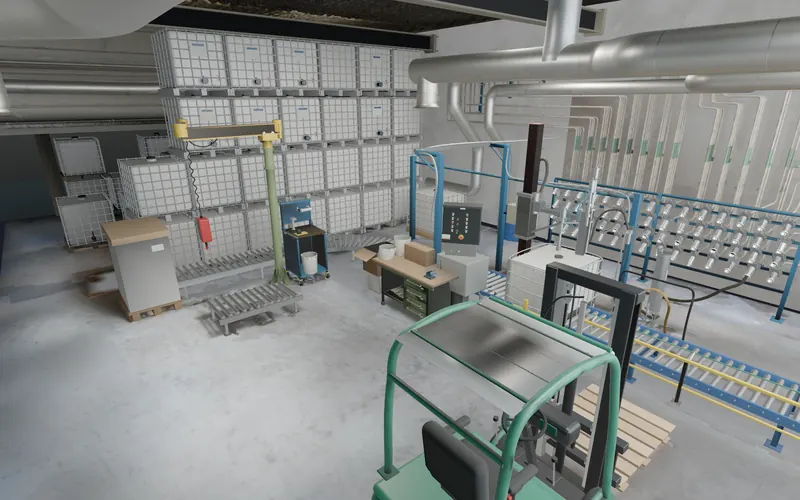
The factory starter has a moving conveyor, loose parts, an inspection tray and an arm. You write the task. Run it, read the decision notes and see where the twin’s idea of the cell differs from yours. Then build the real cell from your own photographs and drawings.

  • Start from the conveyor starter and write your own task
  • Bring PDFs, drawings and CAD exports into a custom scene
  • Every attempt kept, with the reason it ended
The solution page
05

Teaching and training

A robotics lab that fits in a browser.

Students can build a scene from a photograph of their own desk, run a task in it and read exactly why it failed. The evidence archive is a complete lab notebook. Welcome credits cover a first project.

  • One photograph per student, one scene each
  • Read decision notes beside the frames
  • Download the archive for marking
Design partners

Work with us directly.

We take on a handful of design partners at a time. You get the two people who wrote the platform. We get real tasks and honest feedback. Nothing about your work is published without your written consent.

What you get

  • Environments built from your photographs, drawings and documents, with us in the loop.
  • A direct line to both founders, and a shared channel for questions.
  • Weekly reviews of your runs: what the model saw, where it went wrong, what to change in the scene or the task.
  • Budgets and limits shaped to your tasks, beyond the defaults.
  • Early access to new starters, primitives and models before they reach the menu.

What we ask

  • Real tasks from your work, not demonstrations built for us.
  • Honest feedback, including the runs that went badly.
  • An hour a fortnight with the engineers who run the platform.
  • Permission to publish anonymised results only if you agree in writing, and never before.
week 0

A call

You describe the task and what you have to build it from. We say plainly whether RobotGym can do it today.

week 1

The scene

We rebuild the workspace with you from your material and agree the success check before anyone runs a model.

weeks 2 to 6

The runs

You run models against the scene. We review the evidence together and change what needs changing.

after

Your call

Keep going on a plan, take the scenes and archives with you, or both. Nothing is locked in.

Bring us a task.We will tell you plainly whether RobotGym can do it today.

Say what the robot needs to do, what you have to build the scene from and how you would judge success.

Or write directly to [email protected]. There is also a Discord.

Opens your mail client addressed to [email protected]. Nothing is stored on this site.