Moving Atoms
World models for robotics San Francisco · London
YBacked by Y Combinator

VR for robots.

There isn’t enough data to solve robotics. Even if you hired armies of humans.

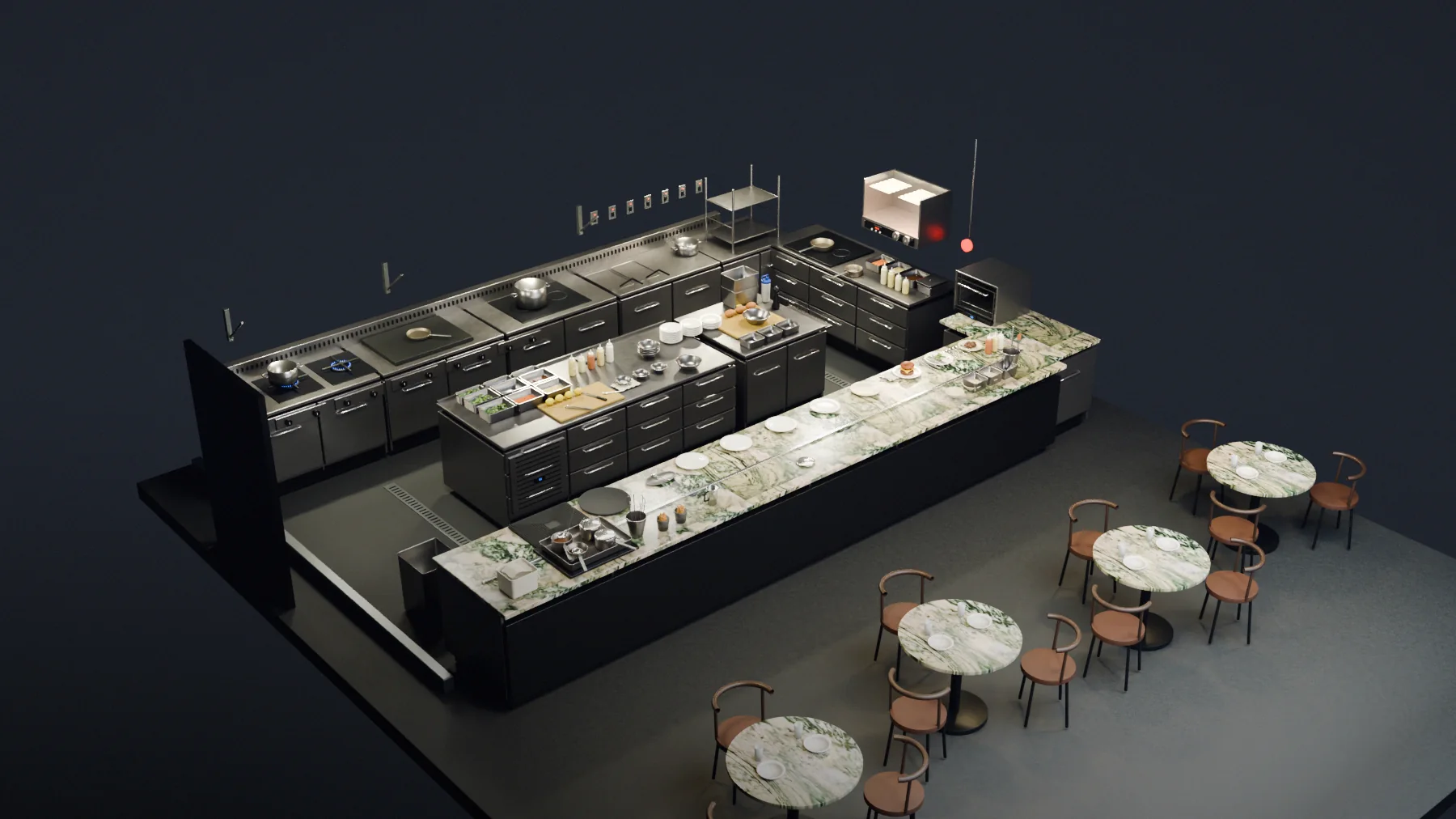
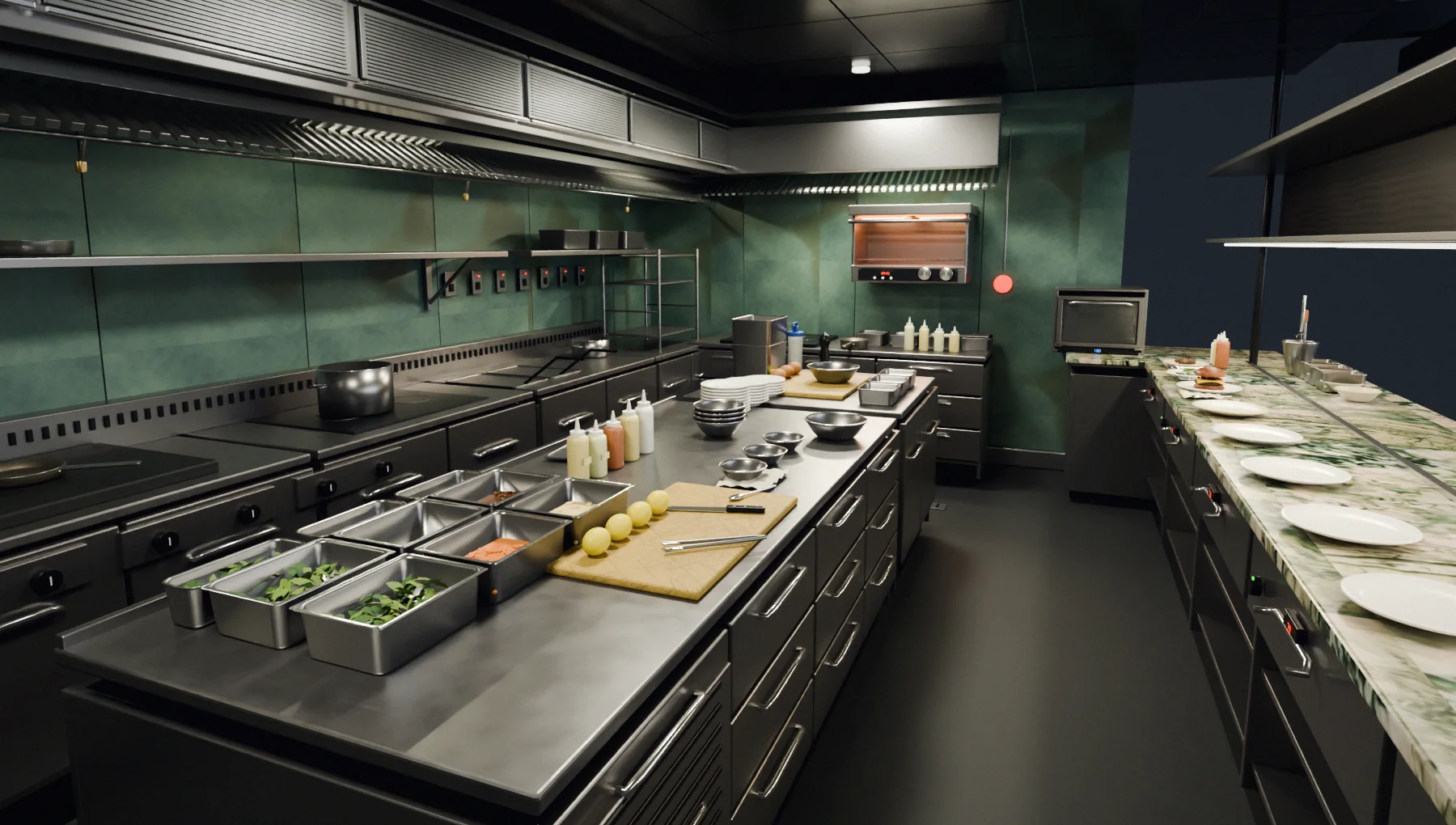
We’re approaching the problem a different way. Our world foundation models are SOTA at generating virtual environments for robots to train in.

Read the research Get in touch
01 — What we build

Three models.

01 · Prediction

It knows how the world behaves

Contour-line plate: a folded writ half drawn from its delivery sleeve, its wax seal broken in two, with an ochre line arriving from beyond the plate and ending at the break.

Show it a scene and it continues the scene — things fall at the right speed, liquids spread, cloth settles. This is what a video model already does well, and it is the foundation everything else stands on. It is also, on its own, not enough: a model can render gravity perfectly and still be useless to a robot.

Physics, learned from watching
02 · Intervention

It knows what your actions do

Contour-line plate: an inkwell overturned across an open ledger, the spill drawn as concentric contour rings over the ledger's own ruled entries, its outer edge traced in ochre.

Now you can intervene. Hand it a movement — this joint, this far, this fast — and it shows you the future that movement produces. Change one number and the future changes with it. This is the line between a model that has watched the world and one a machine can actually plan inside.

Counterfactual, not just plausible
03 · Decision

It decides, and shows its reasoning

Contour-line plate: an open ledger with one entry scraped away to an abraded patch and the same entry re-ruled above it in ochre, a scraping knife resting on the page.

The same model, sampled differently, proposes the movement and the consequence together. That makes it a controller you can interrogate: every command arrives with the future it expects, so you can check the prediction against what actually happened and know which half was wrong.

One set of weights, three behaviours
What it is for

What a robot can do once it can imagine.

Where this sits

The two things closest to this, and what neither gives you.

Contour-line emblem: a heavy padlock with its hasp sprung open and a pry bar resting against it. Watches, cannot be steered

Video models

They have watched more of the world than any robot ever will, and it shows. But there is no way to intervene in one. You can describe what you want in words, and the evidence is that a model steered by description alone performs indistinguishably from one steered by nothing at all.

Contour-line emblem: a toothed gear wheel with one tooth broken away. Exact, but hand-built

Physics simulators

Fast, repeatable, and exactly as rich as whatever somebody modelled by hand. Every object, every surface, every friction coefficient has to be authored. The greasy pan, the floppy bag, the cluttered counter — the long tail that breaks real robots — is the part nobody builds.

Contour-line emblem: an empty seal matrix leaving a blank, unmarked impression. Where we work

Both at once

A simulator that learned the world from footage instead of being authored — so it inherits the long tail for free — and that answers to a control input, so a machine can plan inside it. Trained by reality, steerable like a simulator.

02 — Method

Predict it. Then steer it. Then let it decide.

Contour-line emblem: a pair of engineer’s dividers standing open on their points. Step one · working now

Predict

We start from an open video model and teach it physics it does not have. Out of the box these models render gravity at roughly a fifth of Earth’s — and the published fix is startlingly small: a hundred clips and an afternoon of training moves it most of the way back.

  • Open weights, ours to modify
  • Measured against filmed reality
  • Small data, not more scale
Contour-line emblem: a recording drum with paper tape unspooling and a pen tracing a line along it. Step two · in build

Steer

Then the surgery: movements become a channel the model reads, aligned to the video frame they cause. The test is blunt — change one number in a command and the imagined future has to change with it, in the way physics says it should. Most attempts quietly fail this, which is why we run it on every checkpoint.

  • Actions aligned to the frame
  • Trained on failures, not just successes
  • Counterfactual test on every run
Contour-line emblem: an open umbrella, its canopy drawn as concentric contour rings. Step three · in build

Decide

The same weights, sampled to produce the movement as well as the consequence. That is a controller — and an unusually legible one, because every command it issues arrives with the future it expects, which you can hold up against what actually happened.

  • Command and consequence together
  • Evaluated on real hardware
  • Wrong predictions are visible
03 — Who we are

Two brothers, building it.

A two-person company. One of us built recommendation systems at the scale where a small error rate is a large number of people; the other trains models and does the maths. Between us: the training runs, the evaluation harness, and a habit of reading the config file rather than the summary.

Engraved contour-line portrait of Shehryar Saroya.
Co-founder · models & evaluation

Shehryar Saroya

LinkedIn

Worked on TikTok’s video recommendation algorithm — ranking at a scale where a small error rate is a large number of people. Maths and Computer Science at Oxford, Economics at LSE.

Here he does the model work and the benchmark strategy: what to train, on which data, and the harness that decides whether a change actually helped rather than merely looked like it did.

Engraved contour-line portrait of Ahmad Saroya.
Co-founder · training & measurement

Ahmad Saroya

LinkedIn

Reading Maths at Oxford. At GCHQ he trained a network to summarise incoming threats and sort them across seventy-two categories, using Jaccard distance over word embeddings; he has also interned in asset management at J.P. Morgan.

Here he does the training and the measurement: the runs themselves, and the instrumentation that establishes from a model’s own output what it actually learned — which is the part everything else has to be judged on.