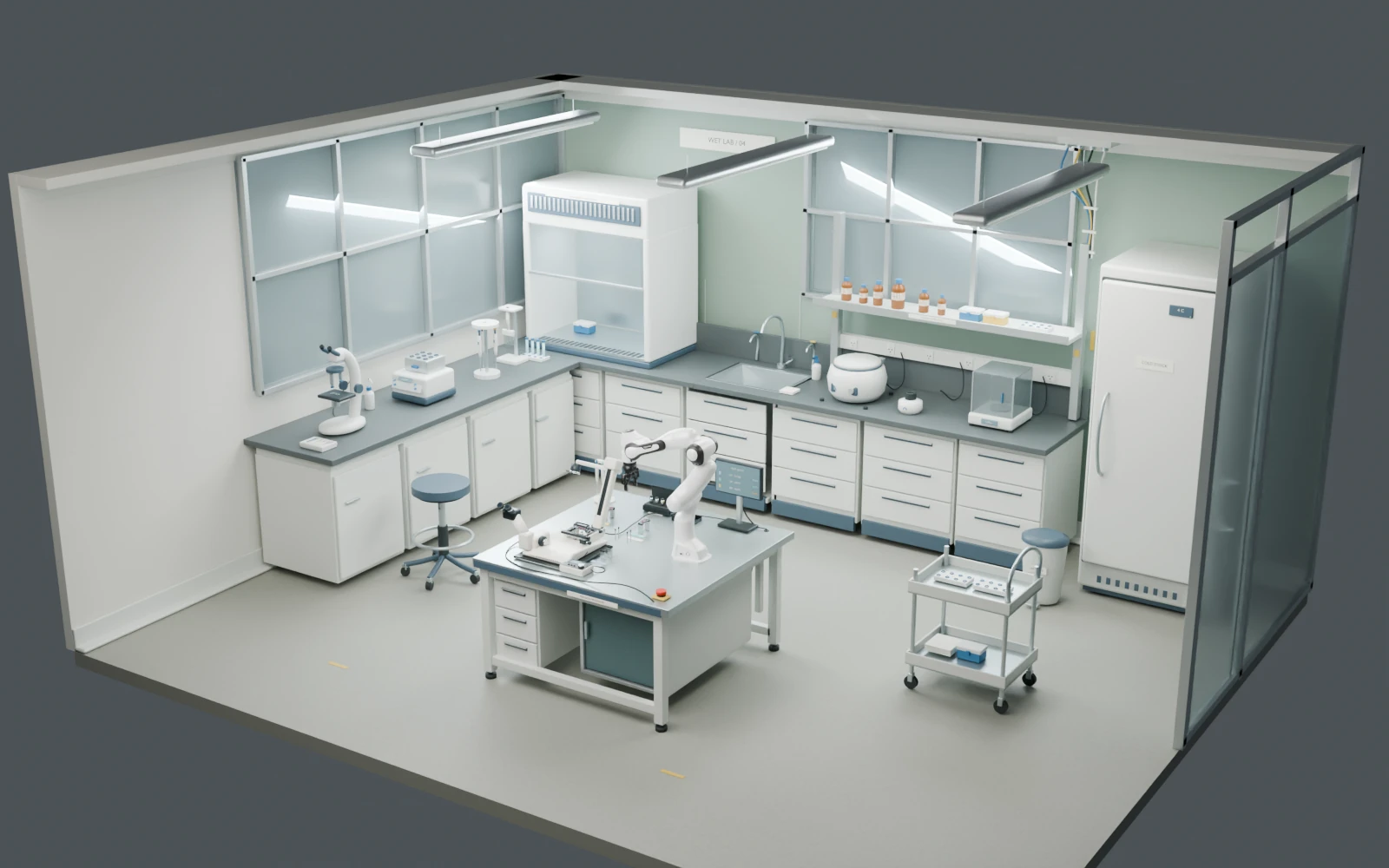
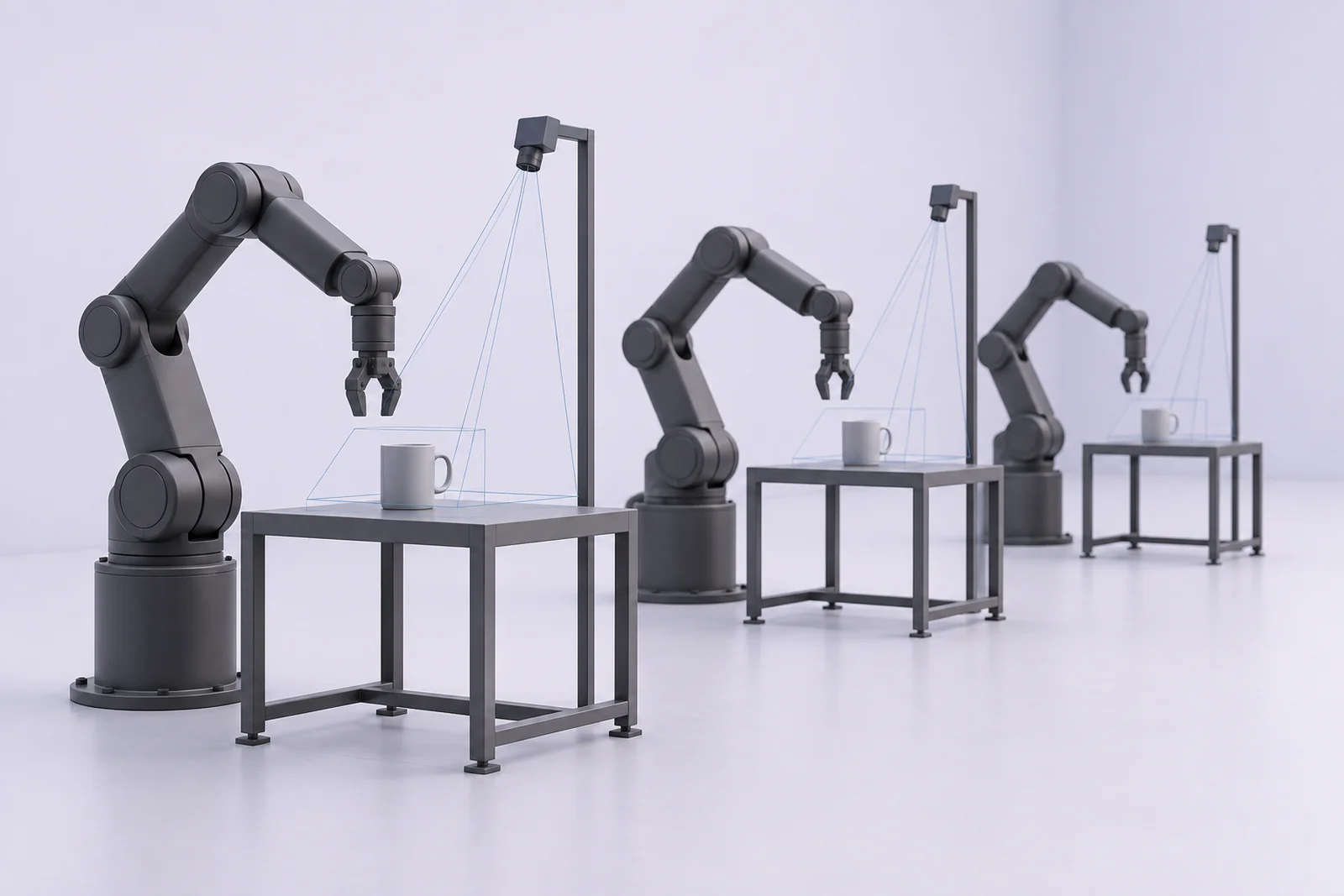
Evaluate GPT-6 Astra, Claude Fable 5 and Claude Fable 5.1 on physical tasks through one shared harness, with the cameras, primitives, budgets and judge held fixed.
Text and code get evaluated every day. A room with a robot in it almost never does.
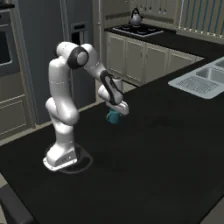
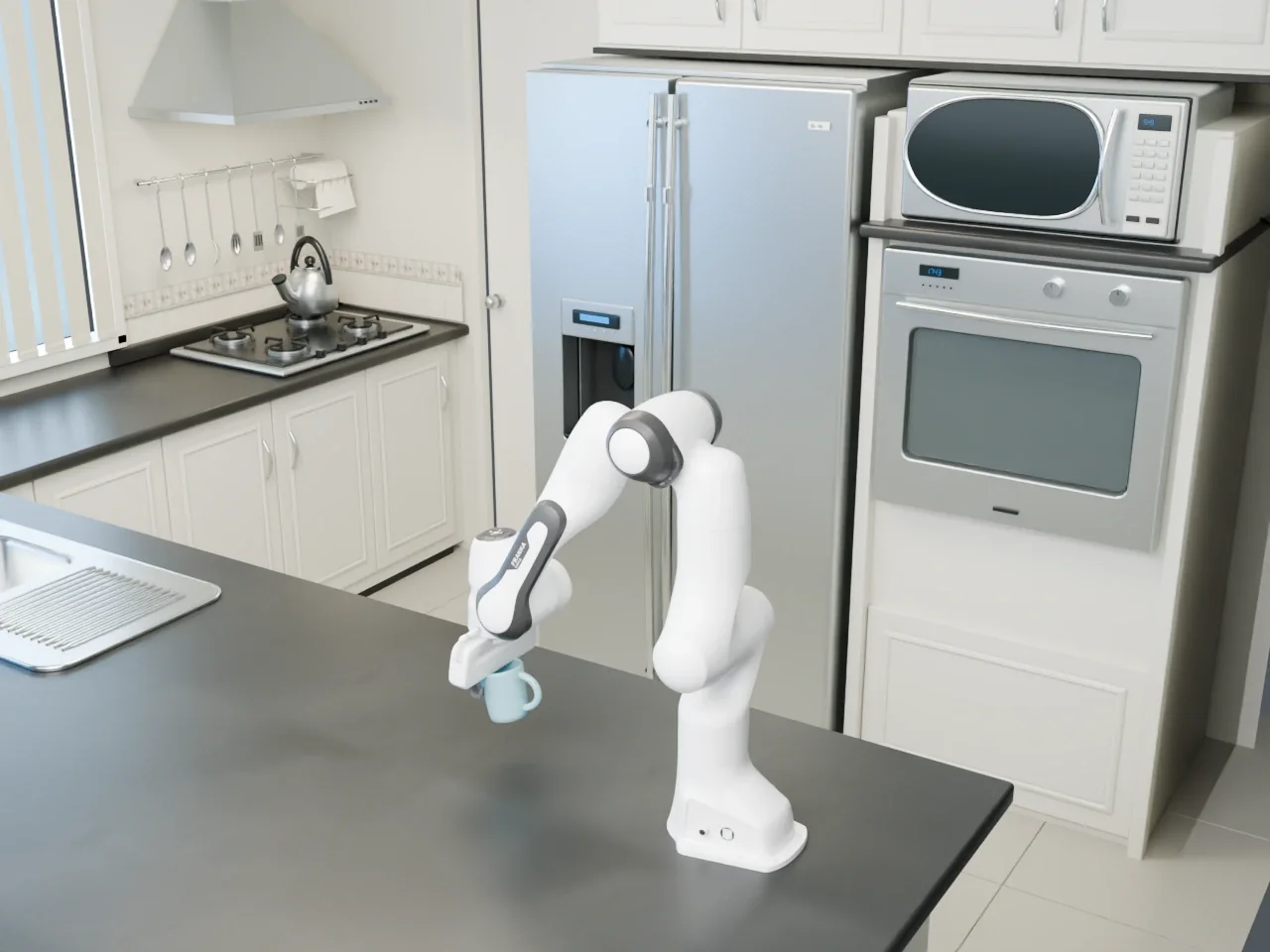
What the model receivedkitchen · step 282success
Policy camera · 224 px · unchangedSpectator render · not a model input
harness
Everything fixed except the model
Every model receives three RGB cameras, the measured gripper pose and the camera calibration. No object positions and no hidden success signal. It acts through the same primitives, the same 20 Hz controller and the same budgets. Differences between attempts belong to the model.
Cameras and proprioception only. Labels in images are scene content, not instructions.
move_to, move_by, rotate_down, grip, hold, look, program and finish.
A finish call is a stop request. The simulator’s predicate decides.
atom-program.pyeveryday kitchen · program 10 of 10
# Program 10 at control step 282grip(0, steps=24)
current = pose()
move_to(current[0], current[1], current[2] + 0.12, steps=32)
checkpoint(note="Inspect whether the mug lifted with the gripper
and is held between the fingertip pads.")
two doors
One call at a time, or one program
A model can call primitives one at a time, looking between calls, or write a short bounded program that runs several moves between calls and then checkpoints to look again. The kitchen run used ten programs. Programs run in a restricted language in a separate process with no provider keys, no network and no access to other episodes.
Tool calls with fresh images between turns.
Programs over the same primitives, sandboxed.
Saved programs replay with zero new model calls.
Usagerun d9e05837 · 10 requests
Input tokens34,352
Output tokens6,075
Cached tokens12,420
Cache writes1,380
Median inference14.2s
Failed attempts0
cost
Costs and clocks, measured
Model calls are the expensive part of a run. The harness caches the stable prefix of every request explicitly, and every request’s tokens and timing are in the archive. In the kitchen run, ten requests used 34,352 input tokens with 12,420 of them cached. Median inference was 14.2 seconds per call, and physics paused throughout.
Earlier audits measured a 21 percent input-cost cut on the one-call path and 31 percent on the program path.
Simulated and wall clocks recorded separately, never conflated.
Returned model IDs written into the metrics.
Terminationseparate from success
Reason
Recorded as
Graded
model_finish
stop requested by the model
yes, by the predicate
sim_time_limit
simulated seconds exhausted
at the limit
model_call_limit
call budget exhausted
at the limit
response_token_limit
a reply ran out of tokens
at the limit
provider_refusal
the provider declined
kept in history
verdicts
A judge the model cannot talk to
Success is read from simulator state against a predicate declared before the run. Termination reasons are recorded on their own, failed attempts stay in the history, and the archive holds the provider requests and responses so a reviewer can read exactly what each model was told and what it answered.
Rigid lift predicate: height reached, both fingertip pads in contact for half a second.
Provider traffic stored with returned model IDs.
Optional ideal depth assistance is labelled on the run. It is not object recognition.